Our website uses cookies to enhance and personalize your experience and to display advertisements (if any). Our website may also include third party cookies such as Google Adsense, Google Analytics, Youtube. By using the website, you consent to the use of cookies. We have updated our Privacy Policy. Please click the button to view our Privacy Policy.

Science and Technology

The 10 Computers That Shaped the Evolution of Computing

ENIAC’s pioneering role in electronic numerical integration

1. ENIAC (1945)The Electronic Numerical Integrator and Computer (ENIAC) is broadly acknowledged as the inaugural large-scale, general-purpose electronic digital computer. Conceived at the University of Pennsylvania, ENIAC covered roughly 1,800 square feet and relied on nearly 18,000 vacuum tubes. Originally, it was engineered to compute artillery firing tables for the United States Army during World War II.ENIAC demonstrated that electronic components could dramatically outperform mechanical systems. It performed thousands of calculations per second, a revolutionary speed at the time. Though programming required manual rewiring and setting switches, ENIAC proved that fully electronic computing was viable and scalable, laying the foundation…
Read More
Antibiotics: how to care for your microbiome afterward

Protecting your microbiome while using antibiotics

How antibiotics affect your microbiomeAntibiotics save lives by killing or inhibiting bacteria, but they are rarely selective only for pathogens. They reduce gut microbial diversity, shift relative abundances, and can expand antibiotic-resistance genes. Common consequences include antibiotic-associated diarrhea (AAD), overgrowth of opportunistic pathogens such as Clostridioides difficile, altered immune signaling, and metabolic changes. The magnitude of disruption depends on the antibiotic class, dose, duration, and the individual’s baseline microbiome and health status.How long recovery takesRecovery timelines vary:Short courses (1–7 days) often produce measurable changes within days; diversity and many taxa commonly begin to rebound within weeks.Many studies report partial recovery…
Read More
The 12 Pioneering Surgeries That Opened New Fields of Medicine

The pioneering use of ether anesthesia that opened new fields in medicine

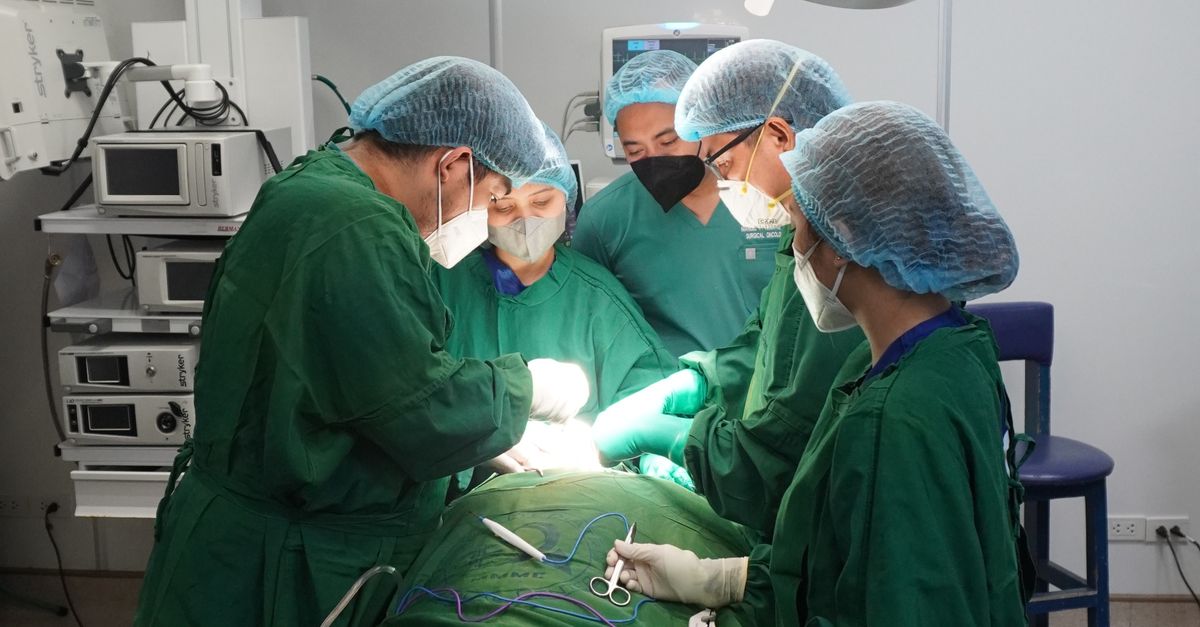
1. The First Successful Use of Ether Anesthesia (1846)Before the mid-nineteenth century, surgery was a brutal, last-resort intervention performed at lightning speed to minimize agony. On October 16, 1846, at Massachusetts General Hospital, dentist William T. G. Morton publicly demonstrated the use of ether anesthesia during the removal of a neck tumor. The patient reportedly felt no pain.This single operation transformed medicine. Surgeons could now operate deliberately rather than desperately. Mortality rates dropped as procedures became more precise, and entirely new specialties—such as abdominal and thoracic surgery—emerged. Modern anesthesiology, patient monitoring systems, and critical care medicine trace their origins to…
Read More
How are climate models and satellite data improving extreme-weather forecasting?

The 15 greatest space missions in history

1. Sputnik 1 (1957)Sputnik 1, launched by the Soviet Union on October 4, 1957, was the first artificial satellite to orbit Earth. Weighing 83.6 kilograms, it transmitted simple radio pulses that could be detected worldwide. Its success marked the beginning of the Space Age and triggered the Cold War–era space race between the Soviet Union and the United States. Beyond its political impact, Sputnik demonstrated that rockets could place objects into orbit, laying the technological foundation for all future space missions.2. Vostok 1 (1961)On April 12, 1961, Vostok 1 carried Yuri Gagarin into orbit, making him the first human in…
Read More
The 12 Vaccines That Saved the Most Lives in History

The role of vaccines in training the immune system to fight diseases

Introduction: Vaccines as the Greatest Life-Saving InnovationVaccination is widely regarded as one of the most powerful public health achievements in human history. By training the immune system to recognize and fight infectious agents before exposure, vaccines have prevented countless illnesses, disabilities, and deaths. According to the World Health Organization, immunization currently prevents 4–5 million deaths every year. The following twelve vaccines stand out for the extraordinary number of lives they have saved, transforming global health and reshaping life expectancy across continents.1. Smallpox VaccineEstimated impact: Over 200 million lives saved in the 20th century alone.Smallpox was once one of humanity’s deadliest…
Read More
How are climate models and satellite data improving extreme-weather forecasting?

The science behind more accurate flood and wildfire forecasts

Why Severe-Weather Forecasting Matters More Than EverExtreme weather events such as heat waves, floods, hurricanes, wildfires, and droughts are increasing in frequency and intensity as the climate warms. Accurate and timely forecasts are critical for saving lives, protecting infrastructure, and guiding emergency response. Over the past two decades, forecasting skill has improved dramatically, driven by advances in climate models and the explosive growth of satellite data. Together, these tools are transforming how scientists detect, predict, and communicate extreme weather risks.Modern Climate Models: From Coarse Averages to Fine DetailClimate models act as computer simulations designed to capture the physical, chemical, and…
Read More
FODMAP: when it helps and how to avoid deficiencies

When a low FODMAP approach helps reduce bloating and abdominal pain

What FODMAPs are and why they matterFODMAPs are short-chain carbohydrates that can be poorly absorbed in the small intestine and then fermented by bacteria in the colon. The acronym stands for fermentable oligosaccharides, disaccharides, monosaccharides and polyols. When these molecules reach the colon, they attract water and are rapidly fermented, which can cause gas, bloating, abdominal pain and altered bowel habits in susceptible people.When a low FODMAP approach helpsIrritable bowel syndrome (IBS): Robust clinical data indicates that a low FODMAP diet is particularly effective at alleviating IBS manifestations. Controlled trials alongside comprehensive meta-analyses document relief in roughly half to three-quarters…
Read More
The 8 Most Toxic Minerals and Compounds Known

The 8 most toxic minerals and compounds with extreme biochemical reactivity

Introduction: Understanding Extreme ToxicityThroughout history, specific minerals and chemical compounds have proven extraordinarily toxic, capable of triggering severe illness or death even upon minimal exposure. While toxicity depends on dosage, route of entry, and duration, certain substances remain inherently perilous due to their biochemical reactivity, bodily persistence, or capacity to disrupt essential cellular functions. Presented below are eight exceptionally lethal minerals and compounds, chosen for their deadliness, historical significance, and well-documented health impacts.1. ArsenicArsenic is a naturally occurring metalloid found in soil, groundwater, and certain minerals. It exists in both organic and inorganic forms, with inorganic arsenic compounds being far…
Read More
How are perovskite solar cells moving closer to commercial scale?

What factors drive the rapid efficiency improvements in perovskite solar cells?

Perovskite solar cells are a class of photovoltaic devices that employ a perovskite-structured compound as their light-harvesting layer. Throughout the past ten years, these systems have evolved from experimental laboratory novelties into major players within the worldwide solar industry. Their attractiveness stems from a blend of high power conversion efficiency, low manufacturing cost, and design flexibility. Laboratory efficiencies have surged swiftly, moving from under 4 percent during the early 2010s to exceeding 26 percent for single-junction cells, and climbing past 33 percent in tandem setups paired with silicon.This rapid pace of advancement is totally unprecedented within the solar energy sector,…
Read More
Why are mRNA platforms expanding into new therapeutic areas?

From vaccines to broad therapeutics: the evolution of mRNA platforms

Messenger RNA platforms have moved far beyond their early identity as vaccine technologies. Their expansion into oncology, rare diseases, cardiovascular medicine, and beyond reflects a convergence of scientific validation, manufacturing advantages, regulatory learning, and unmet clinical need. The same properties that enabled rapid pandemic response are now being leveraged to reshape how medicines are designed and delivered.From Proof of Concept to Broad Clinical ConfidenceThe worldwide rollout of mRNA vaccines offered extensive real-world confirmation that synthetic mRNA can be effective, scalable, and generally well tolerated, with hundreds of millions of administered doses showing that short-lived protein production can trigger strong immune…
Read More