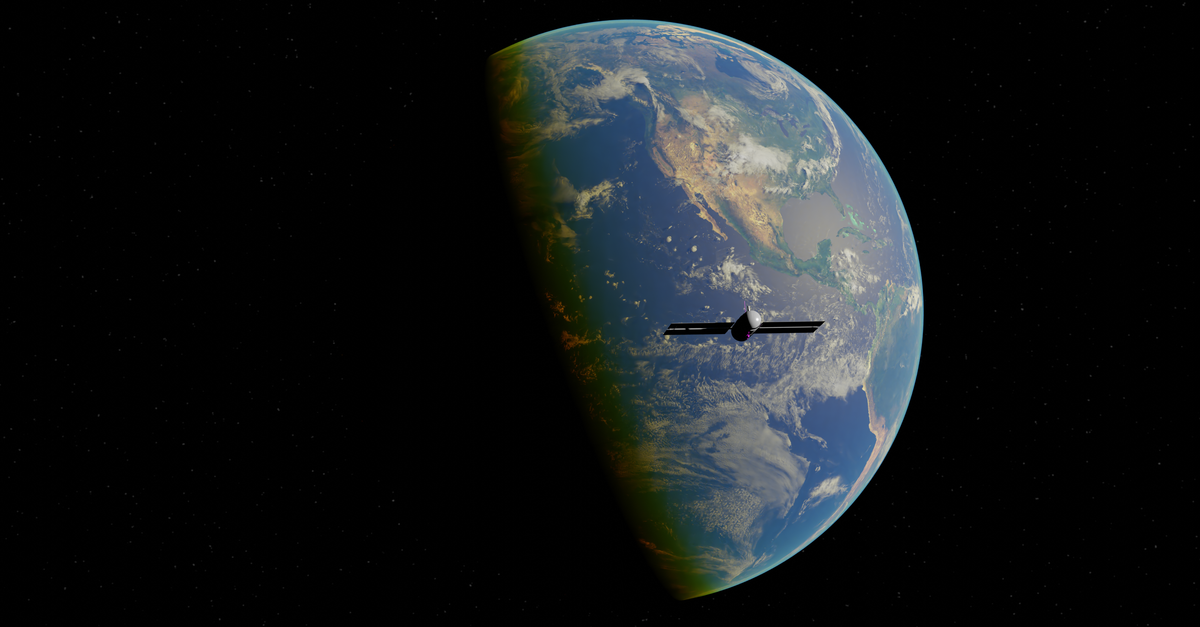
1. Sputnik 1 (1957)
Sputnik 1, launched by the Soviet Union on October 4, 1957, was the first artificial satellite to orbit Earth. Weighing 83.6 kilograms, it transmitted simple radio pulses that could be detected worldwide. Its success marked the beginning of the Space Age and triggered the Cold War–era space race between the Soviet Union and the United States. Beyond its political impact, Sputnik demonstrated that rockets could place objects into orbit, laying the technological foundation for all future space missions.
2. Vostok 1 (1961)
On April 12, 1961, Vostok 1 carried Yuri Gagarin into orbit, making him the first human in space. Lasting 108 minutes, the mission completed a single circuit of the globe. This flight demonstrated that people could endure and operate within microgravity, thereby paving the way for manned space exploration and extended voyages.
3. Apollo 11 (1969)
Apollo 11 achieved the first crewed Moon landing on July 20, 1969. Neil Armstrong and Edwin “Buzz” Aldrin walked on the lunar surface while Michael Collins orbited above. The mission returned 21.5 kilograms of lunar samples and demonstrated precise navigation, lunar landing capability, and safe return to Earth. It remains one of humanity’s most iconic technological achievements.
4. Luna 9 (1966)
The Soviet Luna 9 mission was the pioneer spacecraft to execute a soft landing on the Moon. Panoramic images were transmitted from the lunar terrain, demonstrating that the surface of the Moon was capable of supporting a lander rather than being blanketed in thick dust. Future robotic and crewed lunar expeditions were thus made possible by this achievement.
5. Voyager 1 and 2 (1977)
Launched back in 1977, Voyager 1 and Voyager 2 performed thorough flybys regarding the outer planets. Active volcanoes on Io, intricate ring systems surrounding Saturn, and the tilted magnetic field belonging to Uranus were uncovered by them. Uranus and Neptune have only ever been visited by Voyager 2, which holds that unique status still. Both probes currently reside within interstellar space, keeping up data transmission decades afterward, and thus establishing themselves as the longest-running space missions ever recorded.
6. Hubble Space Telescope (1990)
Deployed in 1990, the Hubble Space Telescope revolutionized astronomy. Operating above Earth’s atmosphere, it provided high-resolution images that helped determine the universe’s expansion rate, estimate its age at approximately 13.8 billion years, and confirm the existence of supermassive black holes in galactic centers. Its service missions demonstrated the feasibility of in-orbit repairs and upgrades.
7. Mars Pathfinder and Sojourner (1997)
Mars Pathfinder delivered the small rover Sojourner to the Martian surface. It demonstrated innovative airbag landing technology and proved that mobile robotic exploration of Mars was practical. The mission analyzed rocks and soil, providing evidence of past water activity and paving the way for larger rovers.
8. International Space Station (1998–present)
The International Space Station (ISS) stands as a testament to unparalleled global collaboration involving the United States, Russia, Europe, Japan, and Canada. Manned without interruption since 2000, this orbital outpost functions as a microgravity facility that fosters scientific investigations across biology, physics, materials science, and medicine. Furthermore, extended crewed missions aboard the ISS have generated critical data regarding long-duration spaceflight, which remains vital for forthcoming expeditions to Mars.
9. Cassini-Huygens (1997–2017)
The Cassini-Huygens mission studied Saturn and its moons in extraordinary detail. Cassini discovered water-ice plumes erupting from Enceladus and lakes of liquid methane on Titan. The Huygens probe landed on Titan in 2005, the most distant landing ever achieved. These findings transformed understanding of potentially habitable environments beyond Earth.
10. Curiosity Rover (2011)
NASA’s Curiosity rover landed on Mars in 2012 using a complex sky crane system. It discovered organic molecules and evidence that ancient Mars had conditions suitable for microbial life. Curiosity’s ongoing mission has refined understanding of Martian geology and climate history.
11. Rosetta and Philae (2004–2016)
The European Space Agency’s Rosetta mission orbited comet 67P/Churyumov–Gerasimenko and deployed the Philae lander in 2014. It marked the inaugural achievement of orbiting and landing on a comet. Organic compounds were detected by Rosetta, providing valuable insights into the early solar system alongside the genesis of water and terrestrial life.
12. Kepler Space Telescope (2009)
The Kepler mission revolutionized the search for exoplanets. By monitoring the brightness of over 150,000 stars, it identified more than 2,600 confirmed exoplanets and thousands of candidates. Kepler demonstrated that planets are common in the galaxy, including Earth-sized worlds within habitable zones.
13. New Horizons (2006)
New Horizons performed the first flyby of Pluto in 2015, revealing a geologically active world with nitrogen glaciers and mountain ranges. It later explored a Kuiper Belt object named Arrokoth. The mission reshaped scientific understanding of dwarf planets and the outer solar system.
14. James Webb Space Telescope (2021)
Launched in 2021, the James Webb Space Telescope (JWST) observes the universe in infrared wavelengths. Positioned at the Sun–Earth L2 point, it has captured images of galaxies formed within a few hundred million years after the Big Bang. JWST analyzes exoplanet atmospheres, detecting water vapor, carbon dioxide, and methane, significantly advancing the search for habitable worlds.
15. Apollo 13 (1970)
Although it did not land on the Moon, Apollo 13 demonstrated extraordinary problem-solving and engineering resilience after an oxygen tank explosion crippled the spacecraft. The safe return of its crew showcased mission control innovation and risk management, influencing spacecraft design and emergency protocols for decades.
The Enduring Heritage of These Missions
- Technological innovation: Spanning rocket propulsion, robotics, and deep-space communication.
- Scientific discovery: Findings such as Martian water, active oceans on icy moons, alongside thousands of identified exoplanets.
- International cooperation: Chiefly demonstrated via the ISS and collaborative multinational planetary missions.
- Inspiration and cultural impact: Motivating successive generations toward science, engineering, and exploration.
Together, these fifteen missions chart the evolution of humanity’s reach beyond Earth—from the first artificial beep in orbit to detailed studies of distant galaxies and icy moons. They reveal a pattern of expanding horizons: each breakthrough builds on previous knowledge, reduces uncertainty, and transforms distant points of light into worlds with measurable histories. Space exploration continues to redefine humanity’s place in the cosmos, demonstrating that curiosity, collaboration, and persistence can extend human presence and understanding far beyond our home planet.