Our website uses cookies to enhance and personalize your experience and to display advertisements (if any). Our website may also include third party cookies such as Google Adsense, Google Analytics, Youtube. By using the website, you consent to the use of cookies. We have updated our Privacy Policy. Please click the button to view our Privacy Policy.

International

Persona Con Herramienta De Mano Negra Y Plateada

Navigating Global Competition: AI as a Game Changer

Artificial intelligence has moved far beyond a specialized technical niche, becoming a central strategic force that reshapes economic influence, national defense, corporate competitiveness, and societal trajectories. Entities and countries that command cutting‑edge models, immense datasets, and concentrated computing power acquire disproportionate sway. In the AI age, existing advantages in talent, financial resources, and manufacturing are magnified, while new drivers emerge, including the scale of models, the breadth of data ecosystems, and the stance adopted in regulation.Financial implications and overall market sizeAI is a major growth engine. Estimates vary by methodology, but leading forecasts place the potential global economic impact in…
Read More
Algorithmic Bias: A Public Policy Risk Explained

Algorithmic Bias: A Public Policy Risk Explained

Algorithmic systems increasingly shape or sway decisions in criminal justice, recruitment, healthcare, finance, social media, and public-sector services, and when these tools embed or magnify social bias, they cease to be mere technical glitches and turn into public policy threats that influence civil rights, economic mobility, public confidence, and democratic oversight; this article details how such bias emerges, presents data-backed evidence of its real-world consequences, and describes the policy mechanisms required to address these risks at scale.Understanding algorithmic bias and the factors behind its emergenceAlgorithmic bias describes consistent, recurring flaws in automated decision‑making that lead to inequitable outcomes for specific…
Read More
What safeguards exist in modern nuclear power

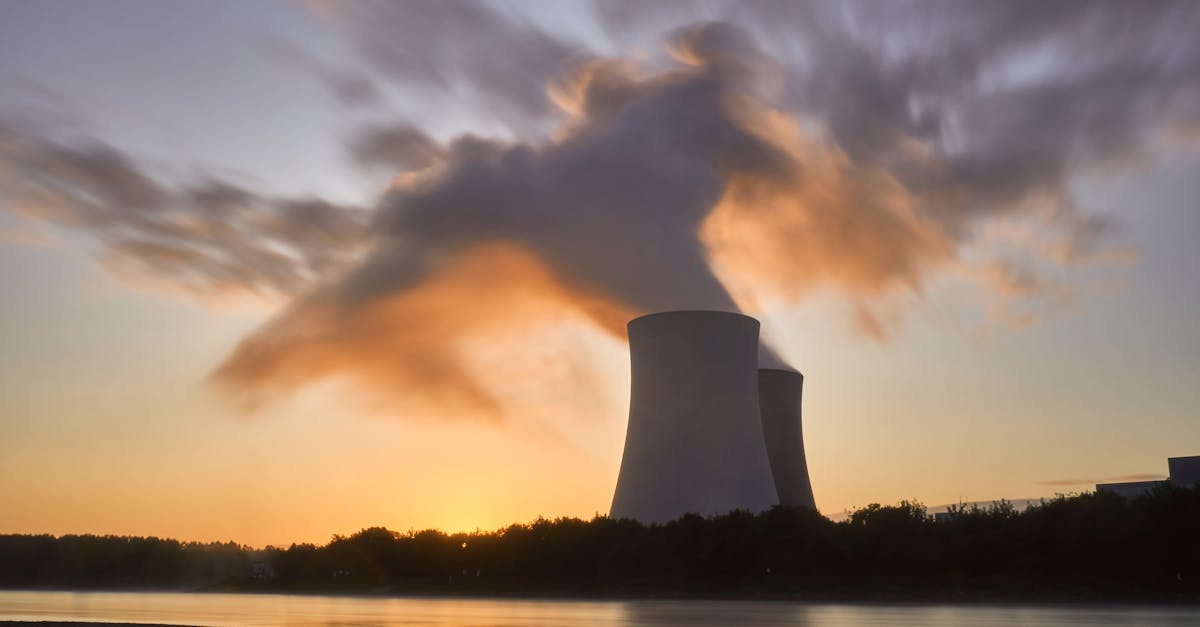
Nuclear Power: A Renewed Public Discussion

Nuclear power has once again moved to the forefront of global public and policy discussions, driven by a convergence of factors such as climate commitments, energy security needs, technological progress, market developments, and evolving public sentiment, shifting the conversation from ideological arguments to practical considerations about balancing deep decarbonization with dependable electricity generation.Key drivers behind renewed attentionClimate commitments: Governments and corporations aiming for net-zero emissions by mid-century face the need for large amounts of firm, low-carbon electricity. Nuclear’s near-zero operational CO2 emissions make it a candidate for supplying baseload and flexible power to support electrification of transport, industry, and heating.Energy…
Read More
What loss and damage means in climate negotiations

Defining Loss and Damage in Climate Negotiations

Loss and damage in international climate discussions describes climate‑driven harms that surpass what societies, nations, and individuals can realistically withstand or adapt to. It encompasses both abrupt disasters such as storms, floods, and wildfires, as well as gradual processes like rising sea levels, desertification, and the retreat of glaciers. The idea highlights the lingering consequences left after mitigation and adaptation efforts have been applied, along with the question of who bears responsibility for addressing those enduring effects.Key dimensions and definitionsEconomic losses: quantifiable monetary setbacks that include damaged infrastructure, ruined harvests, reconstruction outlays, GDP downturns, and disturbances across markets.Non-economic losses: effects…
Read More
What happens when countries restrict food exports

Global Food Security: The Role of Export Limitations

When a nation limits the export of essential foods or critical agricultural inputs, the impact spreads through markets, households, governments, and international relations. Export restrictions can take the form of complete prohibitions, licensing requirements, increased export duties, quota limits, or procedural delays. While these actions often aim to shield domestic consumers or steady local prices, they also trigger effects that reach past national boundaries and last well beyond the immediate period.Mechanisms and immediate market effectsReduction in global supply: When one or several exporters curb their outgoing shipments, the overall volume available worldwide declines, and for commodities with tight supply-demand balances,…
Read More
Why biodiversity is an economic security issue

Biodiversity Loss: A Threat to Economic Security

Biodiversity, encompassing the richness of life found in genes, species and ecosystems, is far from an abstract environmental notion reserved for researchers or conservation advocates. It forms the foundation for the products, services and stability that contemporary economies rely upon. When biodiversity erodes, repercussions spread through supply networks, strain public finances, disrupt corporate accounts and influence national security. Viewing biodiversity as an economic security concern shifts it from a conservation focus to a core pillar of both national and global economic stability.The connection between biodiversity and economic stabilityProvisioning services and supply chains. Biodiversity delivers essential resources including food, timber, medicinal…
Read More
Why food prices rise even when harvests are strong

Decoding Food Price Hikes: Strong Harvests Don’t Always Mean Lower Costs

Robust harvests typically suggest lower food prices, yet the connection between production volumes and what consumers pay is anything but straightforward. Retail prices emerge from the combined influence of physical supply, logistics, regulations, financial conditions, and overall market dynamics. Even an impressive yield measured in tonnes does not necessarily translate into plentiful, low‑cost food for households. The following points outline the key mechanisms that can push food prices upward despite seemingly strong aggregate harvests.Main driversMismatch between global supply and exportable supply: A nation may register an abundant harvest yet ship only limited volumes abroad when domestic consumption, state purchasing programs,…
Read More
Why regulating social media is so hard globally

The Difficulty of Regulating Social Media Worldwide

Social media platforms shape the circulation of information, influence political dynamics, drive commercial activity, and affect private life across borders. Regulating them extends far beyond drafting rules; it requires balancing divergent legal frameworks, navigating technical constraints, weighing economic motivations, accounting for political forces, bridging cultural gaps, and confronting operational challenges on an unparalleled global scale. Below, the core obstacles are outlined, illustrated with examples and data, and accompanied by practical paths for moving forward.1. Scale and Technical ConstraintsSheer volume: Platforms host billions of users and process billions of posts, messages, images, and videos every day. Automated systems help, but human…
Read More
Why food security remains fragile

Food Insecurity: Root Causes & Solutions

Food security refers to a state in which everyone consistently enjoys physical and economic access to adequate, safe, and nourishing food. Although agricultural productivity has advanced and child mortality has fallen in certain regions over recent decades, global food security continues to be vulnerable. A combination of environmental, economic, political, social, and technological forces steadily weakens the availability, accessibility, utilization, and stability of food resources. This analysis outlines the primary drivers, supports them with examples and trend data, and points to practical strategies for reducing this vulnerability.Fundamental factors behind fragilityConflict and instability: Armed conflict is the single largest driver of…
Read More
What influence operations are and how to spot them

What Are Influence Operations and How to Detect Them?

Influence operations are organized attempts to steer the perceptions, emotions, choices, or behaviors of a chosen audience. They blend crafted messaging, social manipulation, and sometimes technical tools to alter how people interpret issues, communicate, vote, purchase, or behave. Such operations may be carried out by states, political entities, companies, ideological movements, or criminal organizations. Their purposes can range from persuasion or distraction to deception, disruption, or undermining public confidence in institutions.Key stakeholders and their driving forcesThe operators that wield influence include:State actors: intelligence services or political units seeking strategic advantage, foreign policy goals, or domestic control.Political campaigns and consultants: groups…
Read More