Our website uses cookies to enhance and personalize your experience and to display advertisements (if any). Our website may also include third party cookies such as Google Adsense, Google Analytics, Youtube. By using the website, you consent to the use of cookies. We have updated our Privacy Policy. Please click the button to view our Privacy Policy.

Economy

Ramaphosa opposes Trump's 30% tariff on South Africa

Ramaphosa condemns Trump’s 30% tariff on South Africa

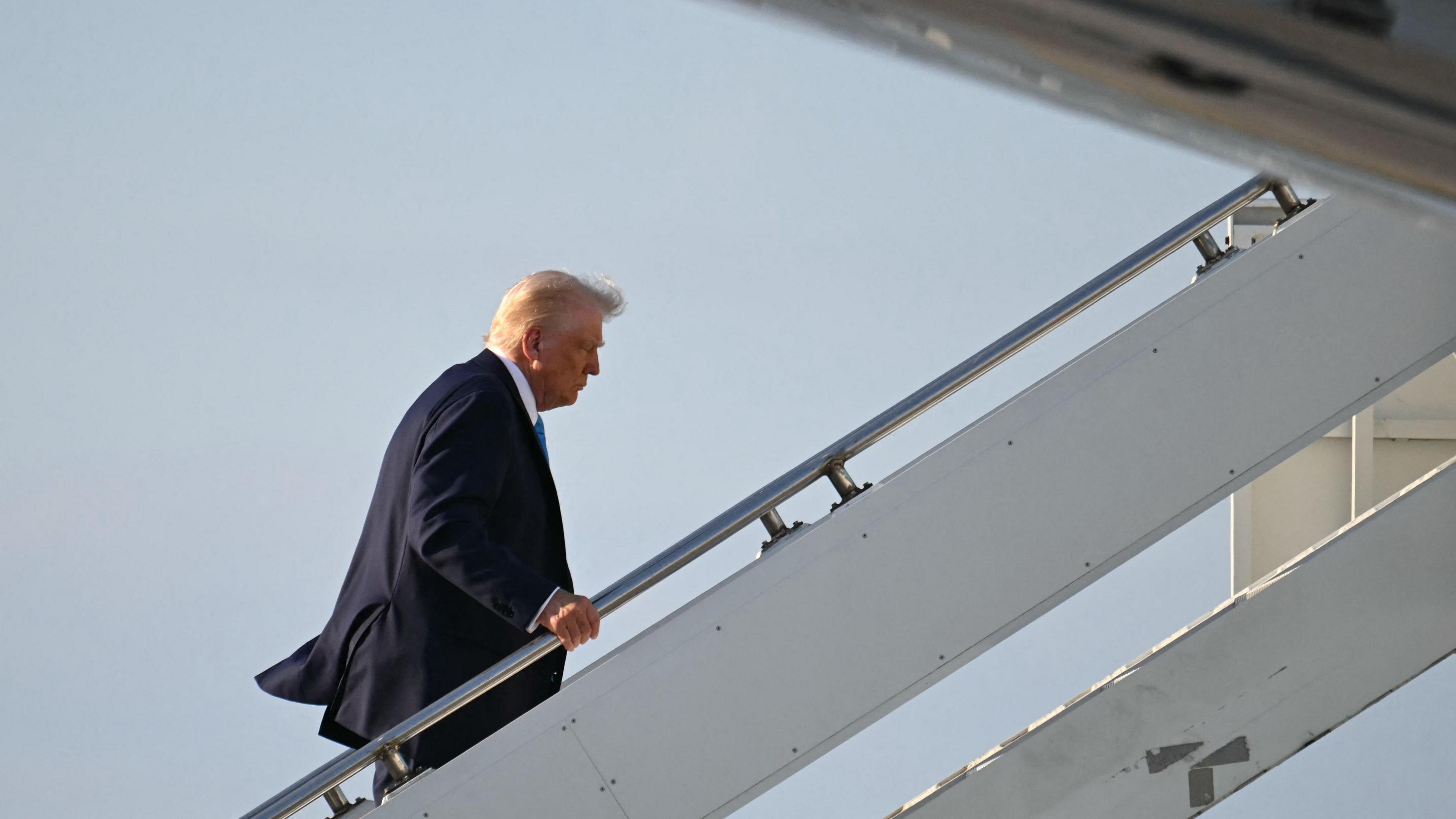
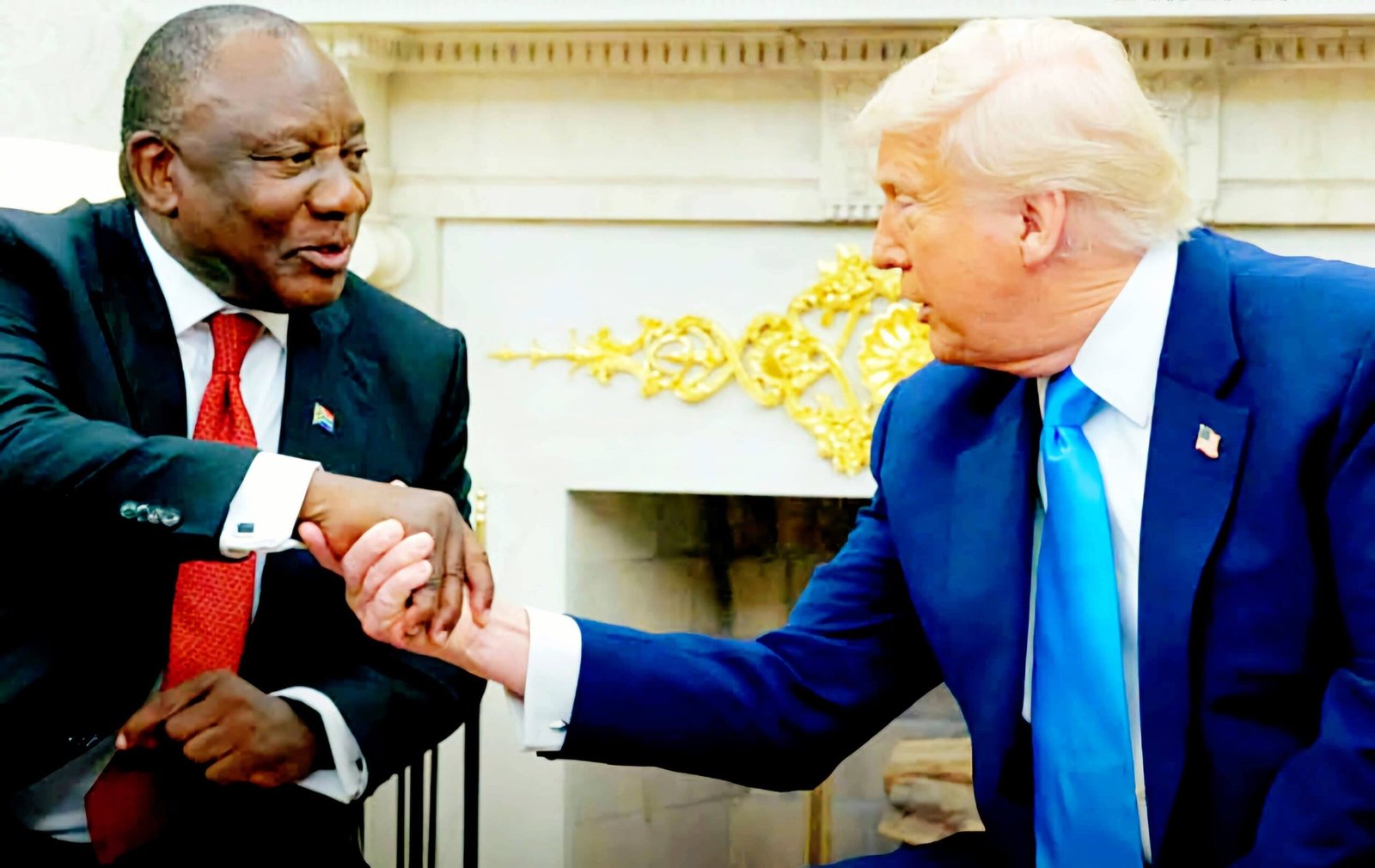
South Africa’s President, Cyril Ramaphosa, has publicly expressed his opposition to the proposed 30% tariff on South African goods, recently announced by former U.S. President Donald Trump. The tariff proposal, which forms part of a broader economic strategy linked to trade realignments, has raised concerns not only within South Africa but also among global trade observers who fear its potential impact on international relations and emerging market economies.The proposed tariff, aimed specifically at South African exports to the United States, is part of Trump’s ongoing rhetoric emphasizing national self-interest and the protection of American industries. While the former president has…
Read More
US delays higher tariffs but announces new taxes for some countries

US postpones higher tariffs, sets new taxes for particular countries

The United States has announced a decision to delay planned increases in tariffs on a range of imported goods while simultaneously unveiling new tax measures targeting specific countries. The move reflects the ongoing complexities of international trade relations as the U.S. government continues to balance domestic economic priorities with shifting global dynamics.The delay in raising existing tariffs offers temporary relief to several key trading partners and industries, many of which had expressed concerns over the potential economic fallout of higher import duties. At the same time, the decision to impose new taxes on certain countries underscores the administration’s continued focus…
Read More
Tariffs, explained: What Trump wants from all these trade deals

Tariffs, explained: Analyzing Trump’s trade deal objectives

Over the past few years, the issue of tariffs has transitioned from economic textbooks to the center of public discussion, primarily because of former U.S. President Donald Trump's prominent strategy toward international trade. Although tariffs have traditionally been an essential component in the economic strategies of countries globally, the way they were utilized during Trump's tenure sparked renewed debates on their objectives, efficiency, and lasting effects on worldwide markets and national industries.Tariffs fundamentally represent taxes levied on goods coming from other countries. Their purpose is to raise the cost of foreign items, thereby promoting the purchase of locally made substitutes…
Read More
There are hundreds of temporary tariff-free zones — and they’re in the US

The Rise of Temporary Tariff-Free Zones in the US

In the complex world of international commerce, tariffs often play a central role in shaping economic policy, influencing global supply chains, and affecting the prices consumers pay for everyday goods. Yet, while much attention is given to discussions about trade barriers and tariffs imposed on imports, there exists a little-known mechanism within the United States that allows businesses to bypass certain duties altogether: Foreign-Trade Zones (FTZs).These zones, scattered across the country, provide companies with temporary tariff relief under specific conditions, offering flexibility that can significantly impact business operations, costs, and competitiveness. Though largely invisible to the average consumer, FTZs represent…
Read More
Trump threatens extra 10% tariff on nations siding with Brics

Trump threatens extra 10% tariff on nations siding with Brics

As discussions around global trade continue to evolve, former U.S. President Donald Trump has made headlines once again with a bold proposal that could reshape international economic relations. Speaking at a recent political event, Trump suggested that if he were to return to office, his administration would consider imposing an additional 10% tariff on goods from countries choosing to align with the expanding Brics alliance—an economic bloc that includes Brazil, Russia, India, China, and South Africa.The suggestion mirrors Trump’s enduring conviction that assertive trade policy can act as an effective instrument to defend U.S. industries and offset the power of…
Read More
What have tariffs really done to the US economy?

Analyzing the true impact of tariffs on the US economy

Tariffs have long been a central tool in the arsenal of economic policy, used by governments to influence trade, protect domestic industries, and generate revenue. In recent years, the United States has relied heavily on tariffs as part of its broader trade strategy, particularly in relation to China and other key trading partners. This renewed focus on protectionism has sparked intense debate over whether tariffs help or harm the U.S. economy. A closer look reveals that the effects of these policies are complex, far-reaching, and often produce mixed results.At their core, tariffs are essentially taxes imposed on imported goods. By…
Read More
Congress passes Trump's 'big, beautiful bill' cutting taxes and spending

Lawmakers pass Trump’s ‘big, beautiful bill’ reducing taxes and spending

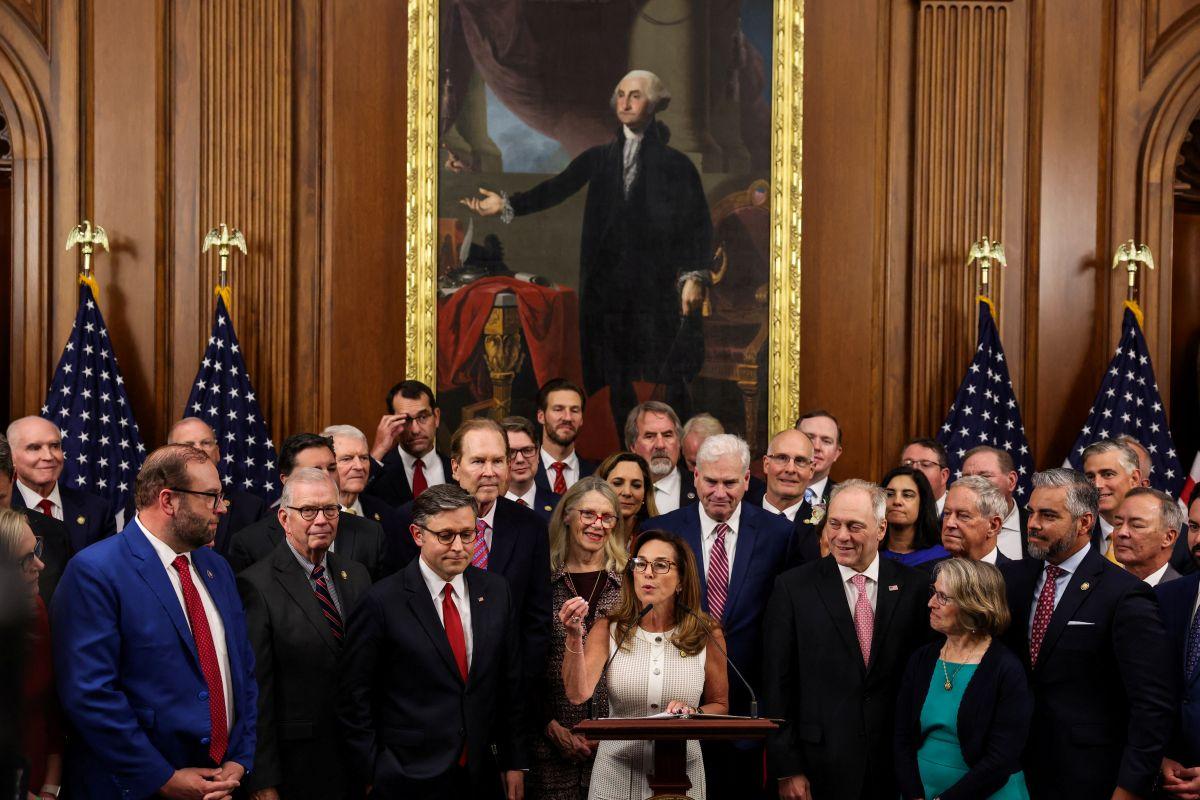
In a significant development that marks one of the most ambitious shifts in U.S. fiscal policy in recent years, Congress has passed legislation championed by former President Donald Trump, aimed at reducing both taxes and government spending. The sweeping measure, which Trump had enthusiastically described as a “big, beautiful bill,” is poised to reshape key aspects of the American economy and public finances for years to come.The law mirrors enduring Republican goals of reducing taxes for both individuals and companies, while also cutting federal spending. Proponents claim the policy will encourage economic expansion, increase investments, and provide American workers with…
Read More
gold and silver round coins and bullions

How can I protect my savings during an economic crisis?

An economic crisis, whether triggered by a recession, banking collapse, geopolitical tension, or a global pandemic, often creates waves of uncertainty. Savings can be jeopardized by inflation, currency devaluation, stock market crashes, and mass unemployment. The 2008 Global Financial Crisis, for example, saw many individuals lose substantial portions of their investments and face liquidity challenges almost overnight. Protecting your savings during such turbulent times is crucial for maintaining financial stability and peace of mind.Diversification: The Core DefenseDiversification is a key strategy for protecting one's savings. Allocating resources into various asset types—such as cash, bonds, stocks, commodities, and real estate—minimizes exposure…
Read More
One taken to hospital after head-on crash in Camillus

What are insurance policies and which ones do I need?

Insurance fundamentally serves as a mechanism for managing risk by offering financial security against unforeseen occurrences. An insurance policy constitutes a formal arrangement between a person or organization and an insurance firm, where the insurer commits to reimbursing the insured for particular losses, harm, or responsibility that arises according to the contract's provisions, in return for periodic payments known as premiums. The kinds and configurations of insurance policies required are greatly influenced by your lifestyle, financial goals, career, and vulnerability to risk.Comprehending How Insurance Policies FunctionUpon buying an insurance policy, you regularly pay premiums—this could be every month, every three…
Read More
money on wallet

Most frequent money management mistakes explained

Effective money management is foundational to long-term financial well-being, yet research confirms that mistakes are widespread even among financially literate individuals. Each misstep often carries compounding consequences, making it vital to recognize and rectify them early. This guide explores the most frequent money management errors, illustrating their effects through situational examples and relevant data.Poor Budgeting and OverspendingThe cornerstone of financial health is a realistic and actionable budget. Yet, data from the National Endowment for Financial Education reveals that more than 60 percent of adult Americans lack a formalized budget. Without a detailed accounting of income and outlays, individuals are more…
Read More